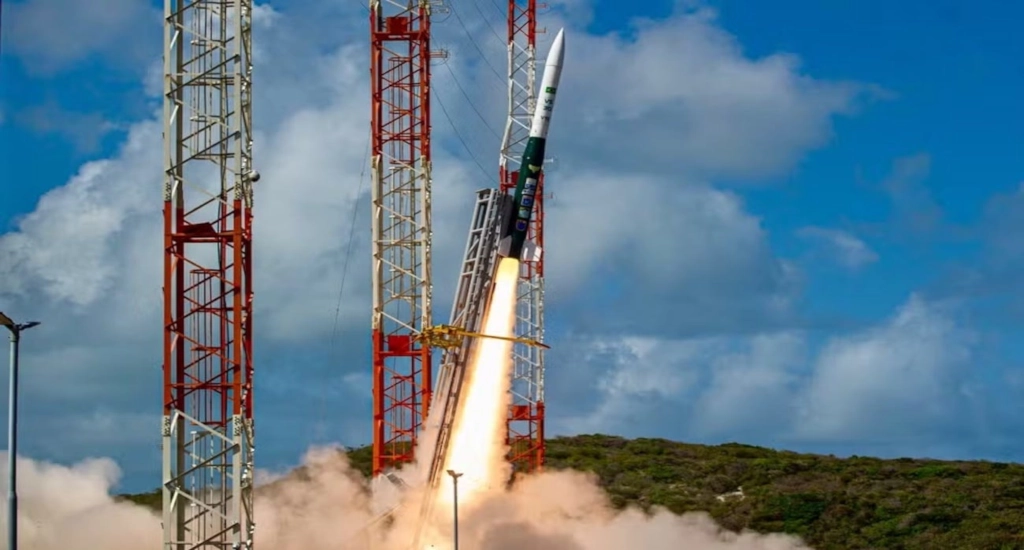
Brazil is putting a new reusable platform through its paces that could give the country greater autonomy in space science. The Suborbital Microgravity Platform (PSM-R) is designed to carry experiments above 100 kilometers in altitude and return them safely to Earth for hands-on analysis.
Launched aboard the nine-meter-long VS-30 V16 rocket, developed by the Aeronautics and Space Institute (IAE), the PSM-R follows a parabolic trajectory that places experiments in a microgravity environment for approximately six to eight minutes. After reaching the apex of its flight, the platform begins its descent: first in free fall, then deploying a drogue parachute to stabilize speed, followed by a main parachute for a controlled landing.
Unlike previous Brazilian suborbital missions, where researchers relied solely on telemetry data beamed back during flight, the PSM-R’s key innovation is the physical recovery of experimental payloads. The capsule typically splashes down in the Atlantic Ocean, where an onboard GPS transmitter sends radio signals to guide a Brazilian Air Force (FAB) helicopter team to the recovery site.
Operation Potiguar 2
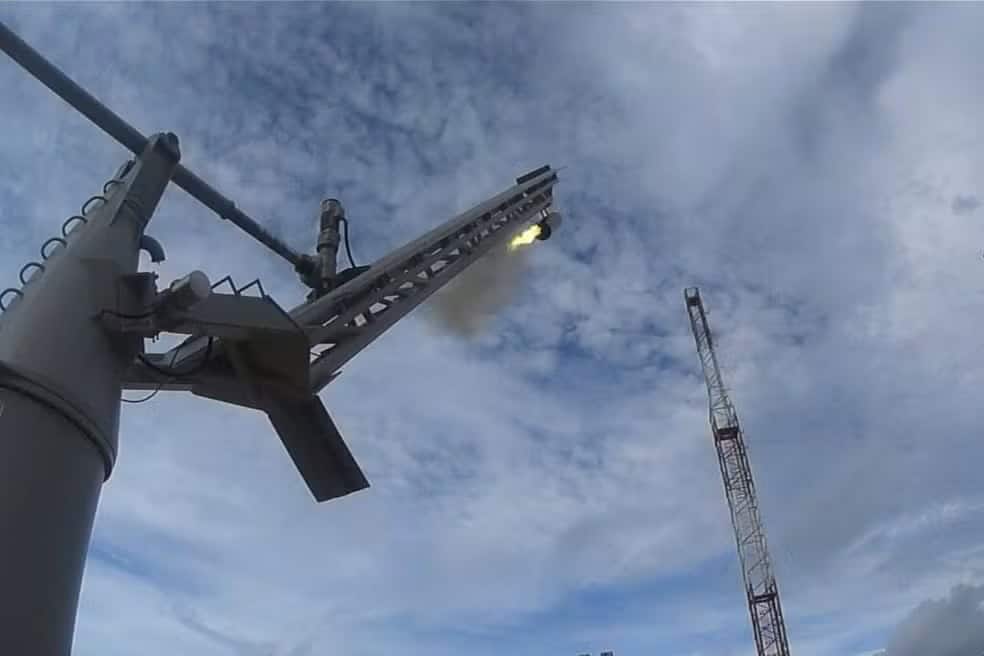
The current test campaign, dubbed Operation Potiguar 2, began on August 31 and is scheduled to run through September 19 at the Barreira do Inferno Launch Center. The primary objective is to qualify the platform’s recovery system — a critical step toward making the PSM-R a routine research tool for Brazilian universities and private companies.
“Microgravity doesn’t mean zero gravity,” explains the program documentation. “It’s a condition where gravitational influence is significantly reduced, causing physical and chemical phenomena to behave differently.” Potential applications include the development of new materials, combustion process studies, pharmaceutical research, space agriculture, and molecular crystallization.
A microbiology experiment rides along
One of the payloads on this test flight is a 1U CubeSat containing lyophilized (freeze-dried) microorganisms and radiation biodosimeters. The experiment aims to assess how fungi and bacteria withstand the extreme conditions of a suborbital launch and whether they remain viable after reentry.
On the ground, a control group with identical microorganisms and sensors will provide a baseline for comparison. Researchers will also run laboratory simulations using clinorotation — a technique that mimics microgravity — allowing them to contrast simulated results with data from an actual spaceflight.
Toward national autonomy
Brazil currently relies on foreign-made microgravity platforms for such research. If the PSM-R passes qualification, the country could begin regular domestic launches using entirely Brazilian hardware.
“We will be able to produce our own platform. It’s a step toward autonomy in suborbital flights,” said Marco Antonio Chamon, president of the Brazilian Space Agency (AEB), in remarks reported by g1.
The Barreira do Inferno Launch Center, inaugurated in 1965 as the first space launch facility in South America, has hosted more than 400 launches to date. With the PSM-R’s recovery capability now under test, Brazilian researchers are poised to access microgravity conditions more frequently — accelerating the development of the nation’s space technology ecosystem.
Source: Olhar Digital